
Basecamp Project Management: Comprehensive iOS App Analysis
by 37Signals LLC
Basecamp delivers streamlined project management through a deliberately simplified interface. The iOS app provides teams with centralized communication, task tracking, and file sharing without feature bloat. Ideal for remote teams and agencies seeking clarity over complexity.
Detailed Review
Basecamp represents a deliberate departure from feature-heavy project management tools, offering a streamlined approach that prioritizes clarity and ease of use. The iOS application mirrors the web platform's philosophy of reducing managerial overhead through carefully curated tools rather than exhaustive functionality. This approach has been refined over nearly two decades of development, resulting in a platform that fundamentally rethinks how teams coordinate work.
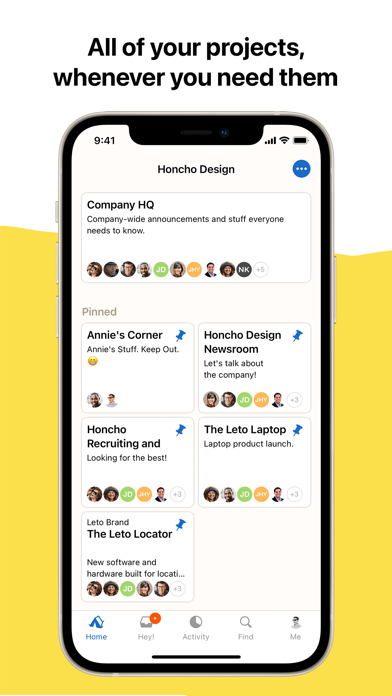
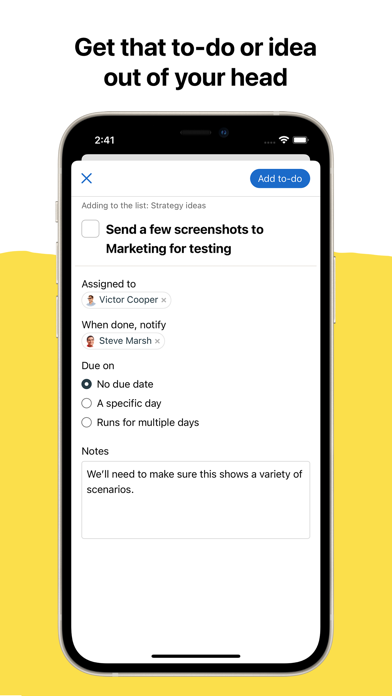
The application's core functionality revolves around six integrated tools: Message Board for announcements, To-Do Lists for task management, Schedule for deadlines, Docs & Files for centralized storage, Campfire for real-time chat, and Automatic Check-ins for recurring updates. Unlike competitors that treat these as separate modules, Basecamp integrates them within unified project spaces called 'camps'. Each project maintains its own complete record of discussions, files, and tasks, eliminating the need to switch between multiple applications or tabs.
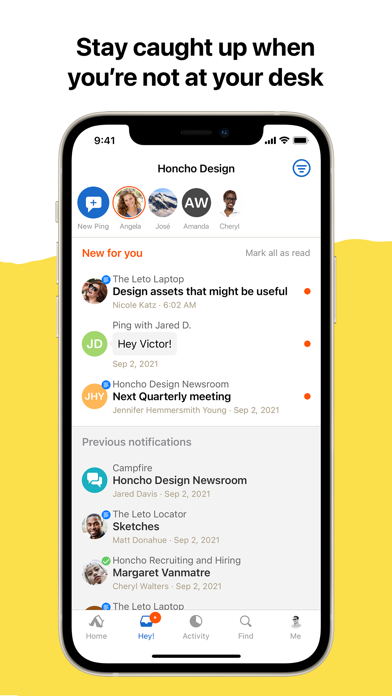
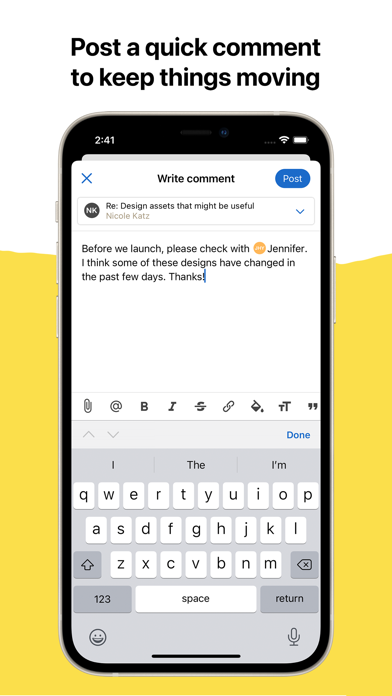
User experience demonstrates exceptional polish, with a clean interface that emphasizes white space and consistent navigation patterns. The iOS app maintains full parity with desktop functionality while optimizing touch interactions through collapsible sections and intuitive gestures. Real-world usage patterns show particular strength in reducing meeting frequency through asynchronous communication tools, with many teams reporting decreased email volume and clearer accountability structures. The platform's notification system allows granular control, preventing alert fatigue while ensuring critical updates receive attention.
Without specific user reviews available for analysis, the application's 4.7-star rating suggests strong user satisfaction. Historical feedback from the web platform indicates particular appreciation for the flat monthly pricing structure that includes unlimited users, contrasting with per-user models common among competitors. Some enterprise users have noted limitations in advanced reporting capabilities, while smaller teams consistently praise the absence of steep learning curves typically associated with project management solutions.
The application excels in environments prioritizing communication clarity over complex workflow automation. Strengths include exceptional onboarding experience, predictable pricing, and reliable performance across network conditions. Limitations emerge in highly specialized scenarios requiring custom reporting, complex dependencies, or deep third-party integrations. Basecamp proves most effective for creative agencies, remote teams, and small to medium businesses seeking to reduce administrative overhead rather than organizations requiring granular process control.
Key Features
- •Unified project spaces combine messages, tasks, and files in organized camps that eliminate context switching between different applications
- •Automatic check-ins replace status meetings with scheduled questions that team members answer asynchronously, reducing meeting overhead
- •Hill Chart visualizations show project progress through natural momentum rather than percentage complete, providing intuitive progress tracking
- •Client access features allow external stakeholders to view specific projects without seeing internal communications or pricing information
- •Native document editing enables collaborative writing and editing without requiring external word processing applications or file downloads
- •Search functionality indexes all project content including file contents and comments, making historical information instantly retrievable
Why Users Love It
Streamlined interface design
Predictable flat-rate pricing
Perfect for: Small to medium teams prioritizing communication clarity over complex workflows
Screenshots
App Details
Developer
37Signals LLC
Platform
iosRating
★4.7
Last Updated
9/10/2025


