
Ultra Ram Swapper: Comprehensive Analysis of Android Virtual Memory Utility
by The Sparks
Ultra Ram Swapper enables rooted Android users to create and manage virtual memory swap files. This utility targets power users seeking enhanced multitasking capabilities and reduced background app termination on memory-constrained devices.
Detailed Review
Ultra Ram Swapper represents a specialized utility application designed exclusively for rooted Android devices, addressing memory management limitations through virtual swap file implementation. The application positions itself as a solution for users experiencing frequent app reloads due to insufficient RAM, particularly on devices with limited physical memory capacity.
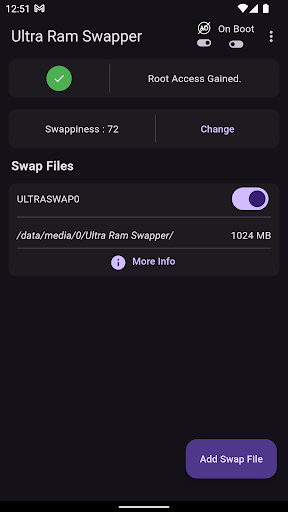
The core functionality revolves around creating, enabling, disabling, and deleting multiple swap files of user-defined sizes. The application requires root access to modify system-level memory management parameters, allowing users to allocate storage space as virtual RAM. Recommended swap file sizes are provided based on device capabilities, though users retain full control over configuration parameters. The swap creation process involves selecting storage location, file size, and swappiness values, with options to activate created swap files immediately or schedule them for later use.
User experience centers around a minimalist interface that prioritizes functionality over aesthetic appeal. The main dashboard displays current swap status, active swap files, and available management options. Real-world usage patterns indicate the application serves two primary scenarios: preventing background application termination during intensive multitasking sessions and maintaining application state across extended usage periods. The technical nature of the utility necessitates understanding of Android memory management concepts, though basic operations remain accessible through guided workflows.
No user reviews are currently available for analysis, making comprehensive feedback assessment impossible. The absence of user testimonials prevents evaluation of real-world performance across diverse device configurations and Android versions. This lack of community feedback represents a significant limitation for potential users seeking validation of stability and compatibility claims.
The application demonstrates clear utility for rooted Android enthusiasts but carries inherent limitations. Primary strengths include granular swap file control and straightforward implementation of virtual memory concepts. Significant constraints involve root requirement exclusivity, potential storage wear from frequent swap operations, and absence of performance optimization features. Ideal use cases involve technical users with rooted devices experiencing memory constraints during development, gaming, or productivity workflows where background process preservation proves critical.
Key Features
- •Multiple swap file management allowing creation and deletion of virtual memory partitions with customizable size parameters
- •Root-level memory optimization enabling system modifications beyond standard user permissions for advanced control
- •Real-time swap status monitoring providing immediate visibility into active virtual memory utilization and performance
- •Storage location selection permitting users to designate optimal partitions for swap files based on speed and capacity
- •Swappiness value configuration allowing fine-tuning of system preference for using swap space versus physical RAM
Why Users Love It
Granular memory control
Root-level optimization
Perfect for: Rooted Android users requiring enhanced multitasking capabilities
Screenshots



App Details
Developer
The Sparks
Platform
androidRating
★3.9
Last Updated
9/10/2025